Sono en orden cronológico


Sono Sion functional prototype '07.2017Producido en 2 copias


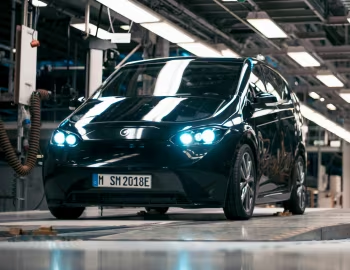

The compact car Sion is an electric vehicle with solar modules incorporated into the bodywork that use the sun to generate a range of up to 30 kilometers a day – self-charged and in addition to its basic range of 250 km (155 mi) according to WLTP standard.
The Sion has 330 mono crystalline PV cells from SunPower (3.65 W each) on the hood, doors, rear and transparent roof to help top up the Li-ion batteries while the vehicle is on the move, or sat in an open air car park or driveway.
The five-door family car's 80 kW three-phase asynchronous electric motor with single speed transmission is said to be good for a top speed of 140 km/h (87 mph).
Sono Sion series design '03.2019
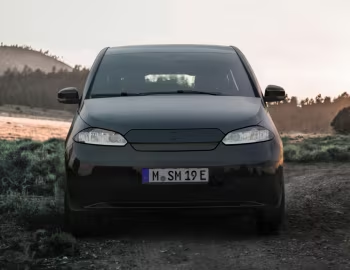
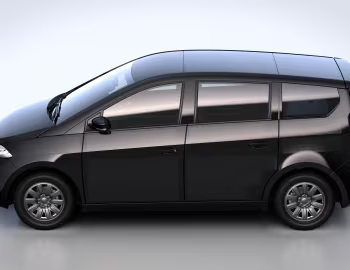
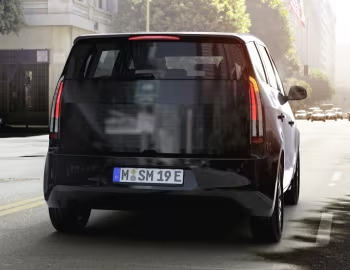

The Sion boasts up to 250 km (155 mi) of "normal" range per plug-in charge of the 35 kWh battery pack, with fast charging and regen braking supported. Its 120 kW motor produces 290 Nm (214 lb.ft) of torque, and can go from standstill to 100 km/h (62 mph) in under 9 seconds, on its way up to a top speed of 140 km/h (87 mph). It's also expected to be able to comfortably tow up to 750 kg (1,653 lb).
The five-door Sion has grown bigger than the prototype before it too, and has been treated to a more emphasized rear end. The 4,290 × 1,830 × 1,670 mm (168.9 × 72 × 65.7 in) dimensions make room for a larger footwell and extra interior space.
Sono Sion second generation prototype '01.2021
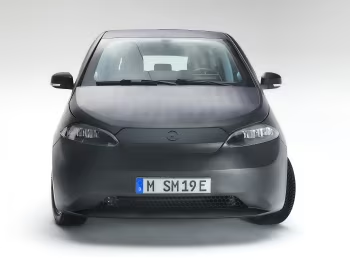
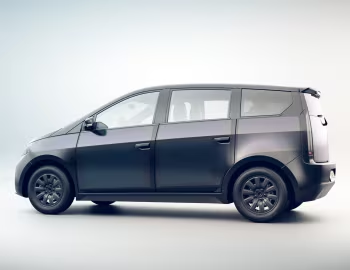
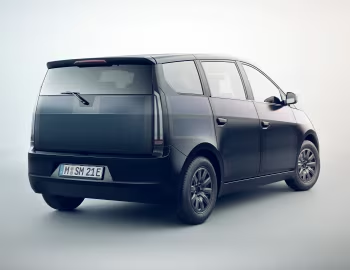

The second-gen Sion features 248 photovoltaic panels integrated into the vehicle's body that will top up its battery pack during daylight hours, for up to 20 miles of extra range per day. The company has opted for electric drive from Continental, which offers 150-kW peak power, 60-kW continuous power and 175 Nm (129 lb.ft) of torque. Top speed is reckoned to be 140 km/h (87 mph).


Scania Citywide K320 Sweden '2022Producido en 6 copias
![Scania Citywide K320 [Sweden] '2022](https://s3.wheelsage.org/format/picture/picture-thumb-medium/s/scania/sono/citywide_k320/scania_citywide_k320_1.avif "Scania Citywide K320 [Sweden] '2022")
![Scania Citywide K320 [Sweden] '2022](https://s3.wheelsage.org/format/picture/picture-thumb-medium/s/scania/sono/citywide_k320/scania_citywide_k320_85.avif "Scania Citywide K320 [Sweden] '2022")
![Scania Citywide K320 [Sweden] '2022](https://s3.wheelsage.org/format/picture/picture-thumb-medium/s/scania/sono/citywide_k320/scania_citywide_k320.avif "Scania Citywide K320 [Sweden] '2022")
Six Scania model Citywide K320 diesel buses operated by the LLT Public Transport Authority (Sweden) were equipped with a customized version of the Sono Motors’ Solar Bus Kit with 1 kW peak installation. These solar-equipped buses were used for public transport in Luleå, Sweden and were intended to help reduce transport emissions. For each year of operation, the solar technology developed by Sono Motors saved approx. 2.9 tonnes of CO2 and up to 1,100 liters of diesel per bus.
Mercedes-Benz Citaro (O 530) '07.2022
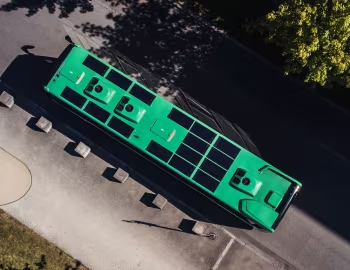
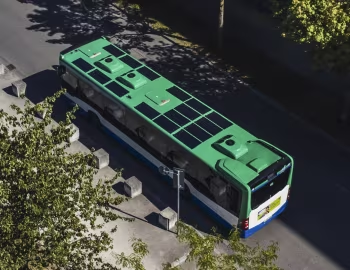
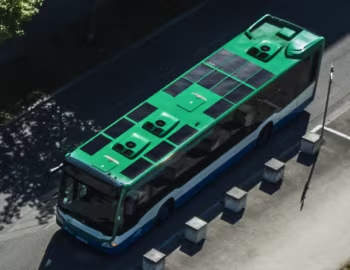

The bus is equipped with the Sono Motors' Solar Bus Kit.
←anteriorsiguiente→
0102
WheelsAge.org '2005–actual