Fiat Cupé en orden cronológico

![Fiat 124 Sport Coupé [UK-spec] '1972–75](https://s3.wheelsage.org/format/picture/picture-thumb-medium/f/fiat/124_sport_coupe/fiat_124_sport_coupe_30_007b03f40d5809f9.avif "Fiat 124 Sport Coupé [UK-spec] '1972–75")

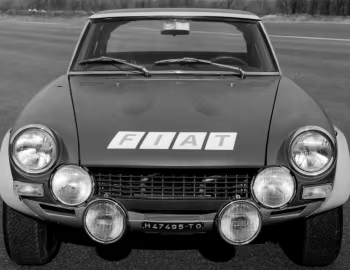
Fiat Abarth 124 Rally Gruppo 4 '1972–75diseñado por Pininfarina


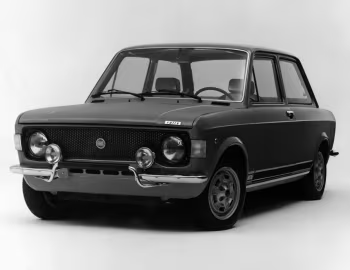
Fiat 128 Rally '1972–76
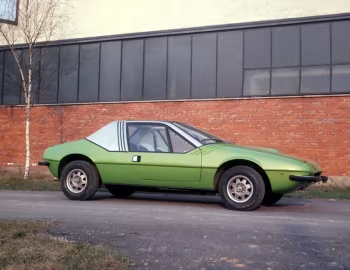
Fiat 132 S Coupé 2 posti "Flares" '11.1972diseñado por MichelottiProducida una sola unidad


1974 Fiat 124 Sport Coupé North America '1973–74
![1974 Fiat 124 Sport Coupé [North America] '1973–74](https://s3.wheelsage.org/format/picture/picture-thumb-medium/f/fiat/124_sport_coupe/fiat_124_sport_coupe_72_00900000040e030e.avif "1974 Fiat 124 Sport Coupé [North America] '1973–74")
![1974 Fiat 124 Sport Coupé [North America] '1973–74](https://s3.wheelsage.org/format/picture/picture-thumb-medium/f/fiat/124_sport_coupe_us-spec/fiat_124_sport_coupe_us-spec_3.avif "1974 Fiat 124 Sport Coupé [North America] '1973–74")
![1974 Fiat 124 Sport Coupé [North America] '1973–74](https://s3.wheelsage.org/format/picture/picture-thumb-medium/f/fiat/124_sport_coupe_us-spec/fiat_124_sport_coupe_us-spec_2.avif "1974 Fiat 124 Sport Coupé [North America] '1973–74")
![Interior 1974 Fiat 124 Sport Coupé [North America] '1973–74](https://s3.wheelsage.org/format/picture/picture-thumb-medium/f/fiat/124_sport_coupe_us-spec/fiat_124_sport_coupe_us-spec_1.avif "Interior 1974 Fiat 124 Sport Coupé [North America] '1973–74")
Fiat Abarth X1/9 Prototipo (128) '1973–74diseñado por BertoneProducido en 5 copias

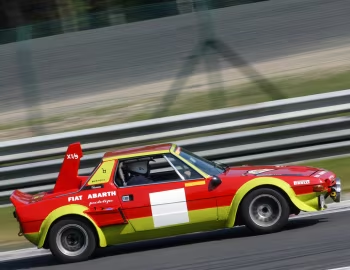
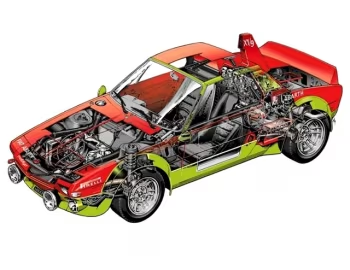
The Fiat Abarth X1/9 Prototipo was a rally-oriented development of the standard Fiat X1/9, created by Abarth in 1973. Based on the Bertone-designed mid-engine sports targa, the car was extensively modified for competition, including enlarged wheel arches, lightweight construction, and revised suspension geometry. Power came from a four-cylinder twin-cam engine derived from the Fiat 124 Abarth Rally unit, with displacement around 1.8 litres and output reaching approximately 180 hp. With a weight of under 750 kg, the prototype achieved strong performance, including a top speed of around 220 km/h. The X1/9 Prototipo competed in several rally events during 1974–1975 and demonstrated competitive potential, including overall victories in events such as the Rally Alpi Orientali and success in other national competitions. Despite promising results, plans for Group 4 homologation - including a proposed production run of 500 units - were ultimately cancelled in favor of the Fiat 131 Abarth Rally program. A small number of prototypes continued to race in selected events, marking the X1/9 Abarth as a short-lived but technically significant chapter in Abarth’s rally history.
WheelsAge.org '2005–actual